By: Adam Bekhet
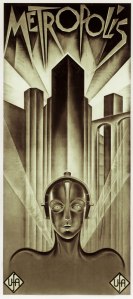
Directed by Fritz Lang in 1927, Metropolis is a film set in the future that portrays a perfect city, or so we think.
This German Expressionist film is well known for it’s emphasis on emotion and silent nature. Metropolis was often thought of as one of the first science fiction films, especially with an extended run time. The film shows the economic disparity between those who work under Metropolis to keep it running, and those who own the city and enjoy the spoils at their expense.
After sailing into New York City with his wife on a vessel, director Fritz Lang saw the skyline which sparked his idea for the film Metropolis. Freder, the main protagonist in Metropolis is instantly mesmerized by a young woman named Maria. Freder finds Maria, but not after exploring the workers village and seeing the working conditions that the workers must endure. This sight disturbs Freder, who eventually finds Maria leading a peaceful uprising. She talks of needing someone who can connect the upper and lower classes to succeed. Freder then states that he could be that connection for the uprising.
Freder’s father, Joh can tell that Feder’s loyalty is in question as he sees his sons concerns for the lower class. After seeking the help of an inventor named Rotwang, Joh has planned to use his expertise to undermine the revolution. However, this plan becomes compromised as Rotwang is secretly helping the revolution instead. Rotwang’s role becomes vital in the meltdown of the city which sees the working class revolt and destroy most of the machinery.
The themes of the separation of classes and most importantly the heart, are the main sticking points of this film. Living in Germany between World War One and Two made expressing separation, pain, and economic disparity all too simple for German Expressionists.
 Adam's Film Review Posts